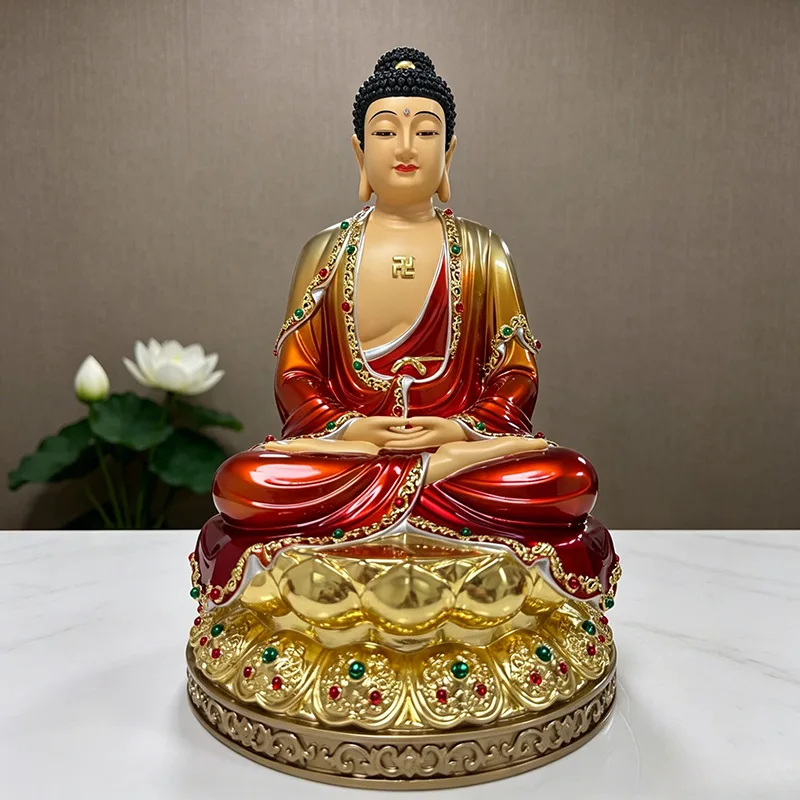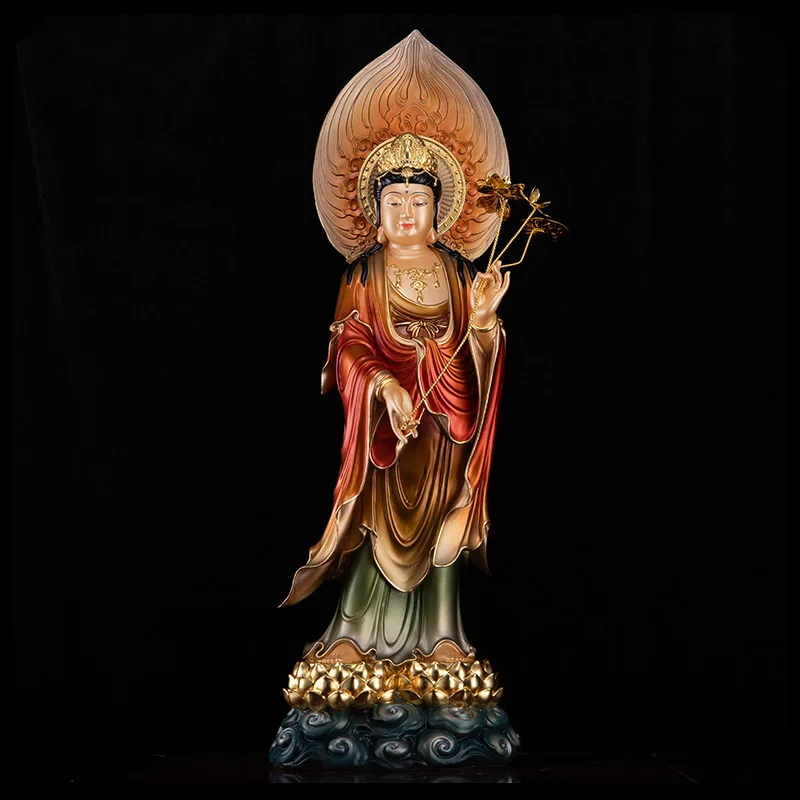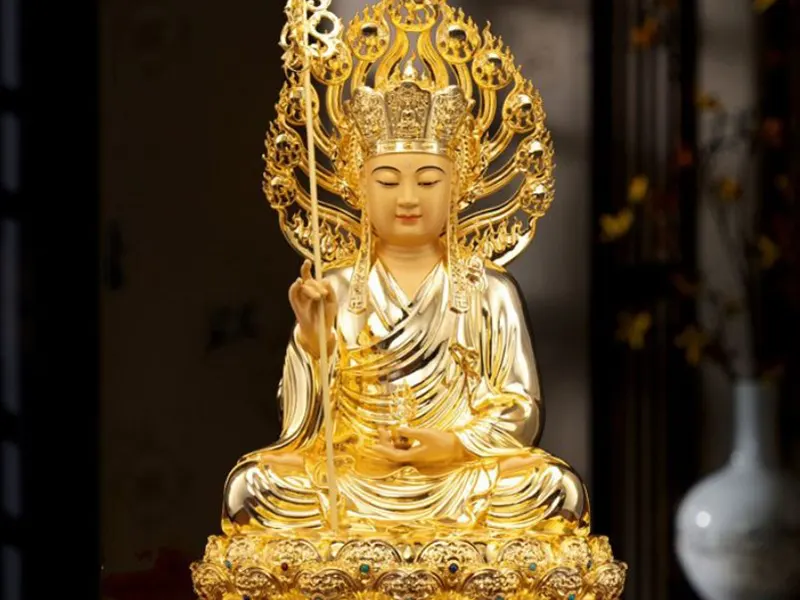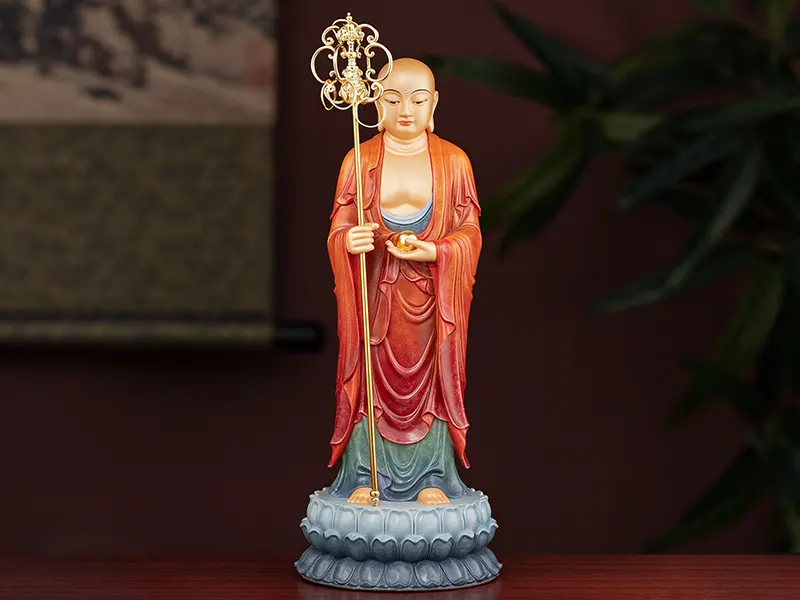
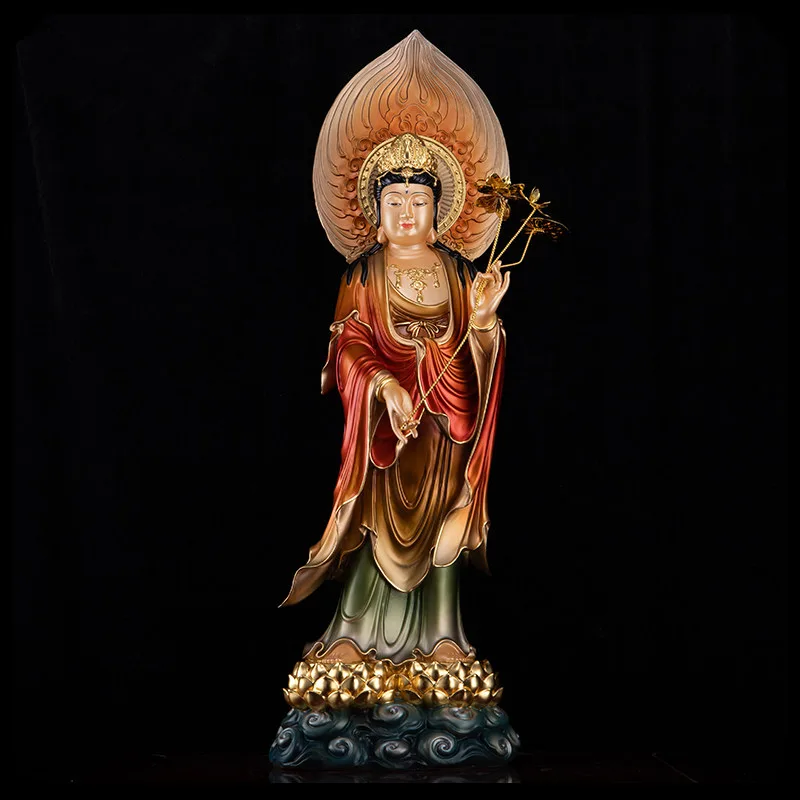
The Brass Mahasthamaprapta Statue with Mineral Painting reflects the relationship between Buddhist iconography, traditional metalworking, and decorative surface techniques. As religious sculpture continues to preserve cultural memory across generations, the materials and processes used to create Buddhist figures remain important subjects in the study of traditional craftsmanship. Brass casting establishes the sculptural structure, while mineral painting adds color and visual detail that contribute to the statue's artistic character.
Mahasthamaprapta Bodhisattva, known in Chinese Buddhism as Dashizhi Pusa, is traditionally associated with wisdom and the power of mindfulness. The bodhisattva frequently appears alongside Amitabha Buddha and Guanyin Bodhisattva as one of the Three Saints of the West. This religious context influences the figure's posture, facial expression, hand gestures, and decorative elements.
In Buddhist sculpture, these visual details are not merely ornamental. They communicate religious identity and help maintain established iconographic traditions. Sculptors therefore draw on historical references, temple imagery, and regional artistic conventions when developing a statue. Preserving these characteristics is particularly important when a sculpture is intended for a temple hall, an altar, or a cultural heritage setting.
Lost-wax casting is a traditional process used to produce metal sculptures with intricate contours and detailed surfaces. The process generally begins with a sculpted model, which is used to create a wax pattern. A refractory shell is formed around the pattern, and heating removes the wax before molten metal is poured into the resulting cavity. Once the casting cools, the shell is removed and the metal surface undergoes finishing.
For a brass Buddhist statue, this method can reproduce complex robe folds, ornamental patterns, facial features, and symbolic accessories. Chasing, polishing, and other finishing operations refine the cast surface and prepare it for subsequent treatments.
Modern workshops may combine traditional sculpting skills with dimensional planning, scanning, or digital modeling, particularly for large-scale commissions. These tools can assist with proportion and repeatability, while the interpretation of religious details still depends on skilled artistic judgment.
Mineral painting introduces another dimension to Buddhist sculpture. Mineral-based pigments have a long history in decorative and religious art, although their composition, binding media, and application methods vary across traditions. Depending on the selected materials and finishing process, painted surfaces can create distinctions between the face, garments, ornaments, and other sculptural features.
The Brass Mahasthamaprapta Statue with Mineral Painting illustrates how metal sculpture and colored decoration can work together as a unified artistic form. The underlying brass provides the sculptural body, while the painted finish establishes visual contrasts and emphasizes selected details. The result depends on the interaction between surface preparation, pigment characteristics, application technique, and the sculptor's original design.
Long-term preservation requires attention to more than pigment selection. Humidity, temperature fluctuations, airborne pollutants, handling, and unsuitable cleaning methods can all affect a painted surface. Appropriate environmental management and careful maintenance help reduce deterioration. Conservation practices should also distinguish between original finishes, later repainting, and repairs, since unnecessary restoration may alter the sculpture's historical appearance.
Today, Buddhist statues are created for temple architecture, religious ceremonies, cultural parks, and private devotional spaces. Production may involve several coordinated stages, including design development, casting, surface finishing, painting, and quality inspection. Workshops combining these processes can maintain greater continuity between the sculptural form and its final decoration.
Fuhui Veyly, established in Huizhou, Guangdong, in 2018, draws on a founding team's experience in brass sculpting and lost-wax casting. Its production activities include metal casting, polishing, gilding, and painted surface treatments. This combination of traditional techniques and organized manufacturing reflects a broader development in contemporary religious sculpture: established artistic practices are being maintained through production methods adapted to different statue sizes and project requirements.
Ultimately, preserving Buddhist sculpture involves both physical care and cultural understanding. Iconographic accuracy, craftsmanship, appropriate surface treatment, and responsible conservation all contribute to the continued appreciation of religious art. The Brass Mahasthamaprapta Statue with Mineral Painting represents this intersection of devotional symbolism, traditional casting, and decorative artistry, demonstrating how established sculptural traditions can remain meaningful in contemporary Buddhist settings.
-