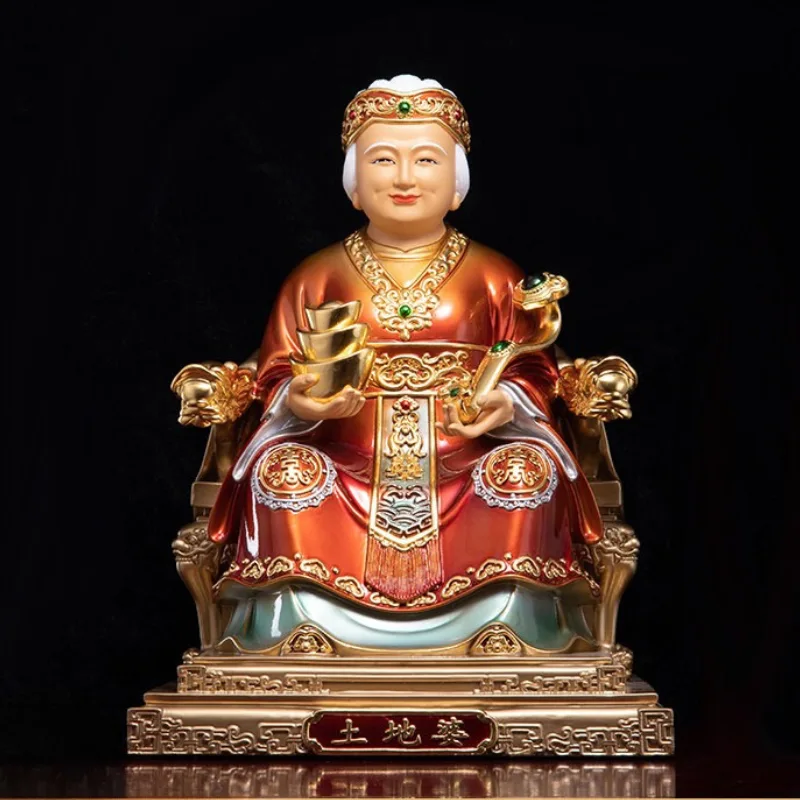
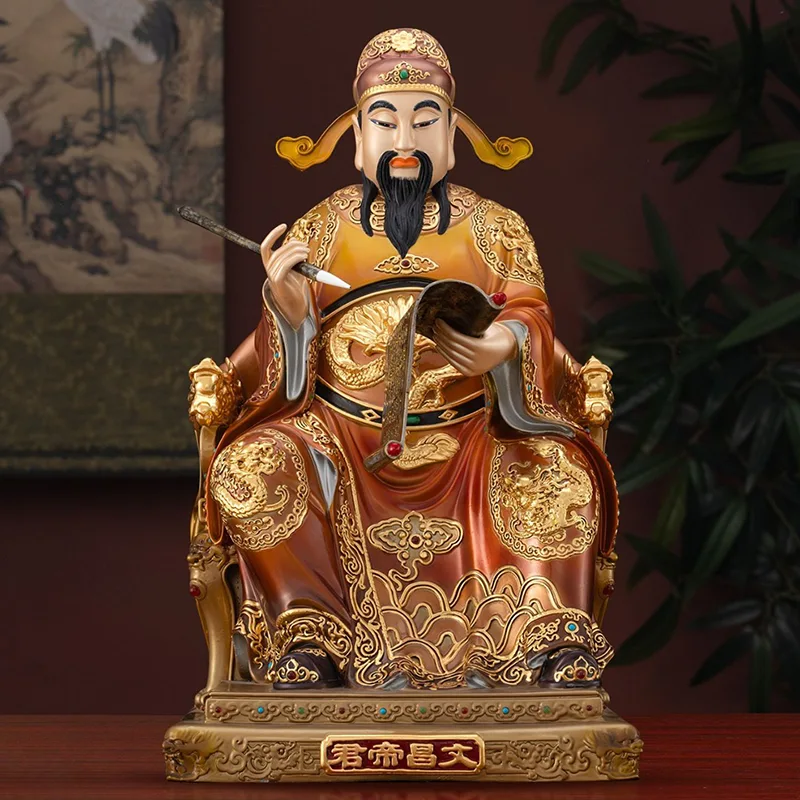
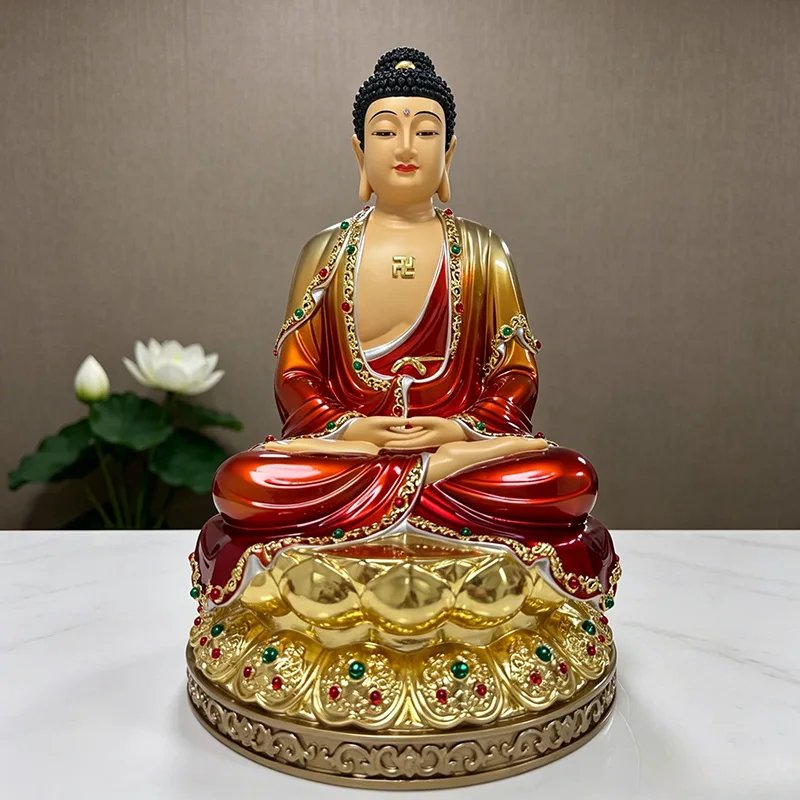
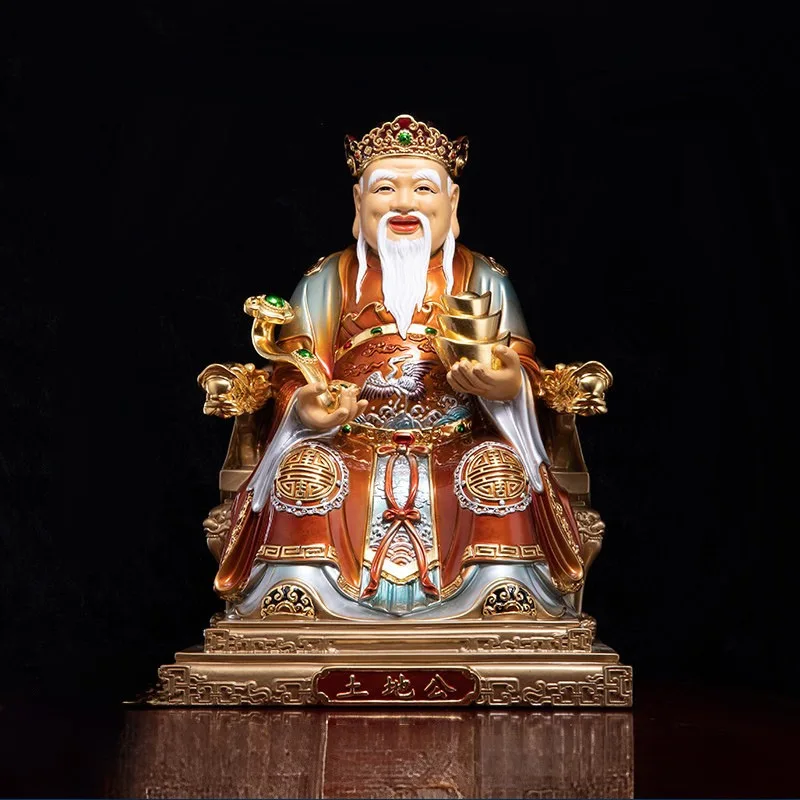
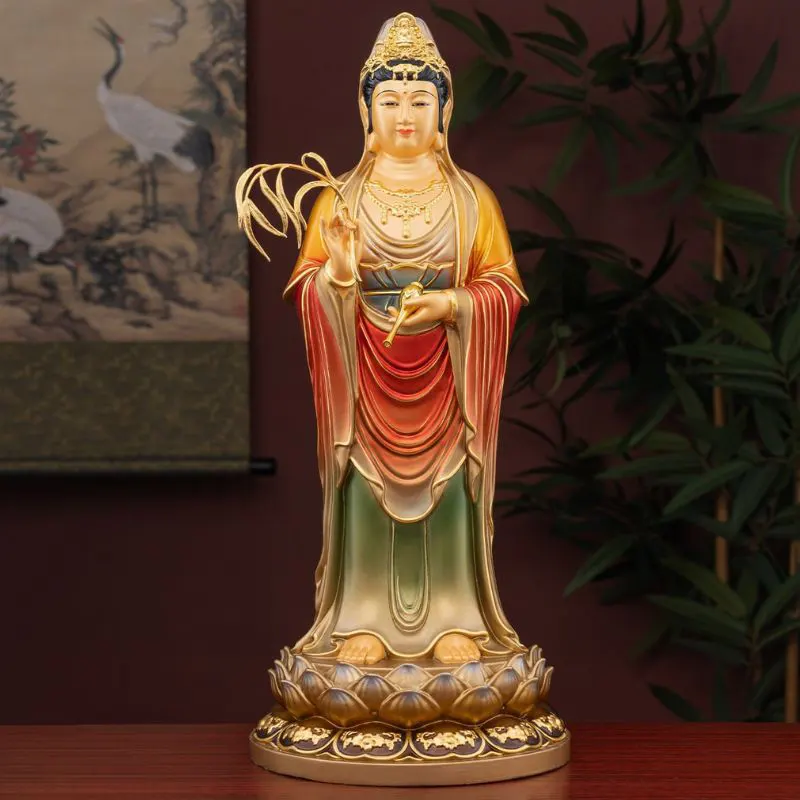
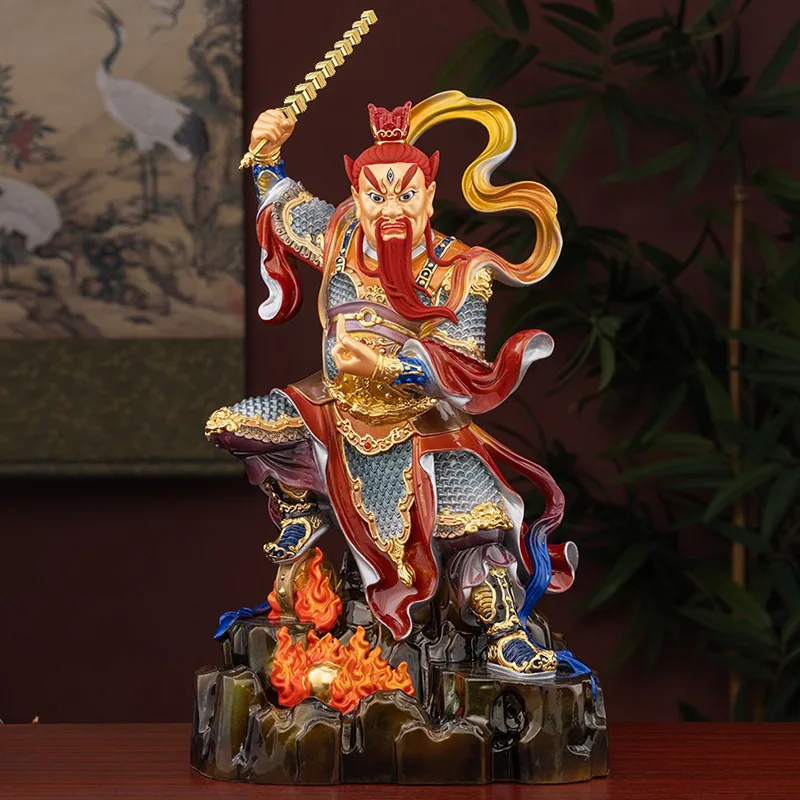
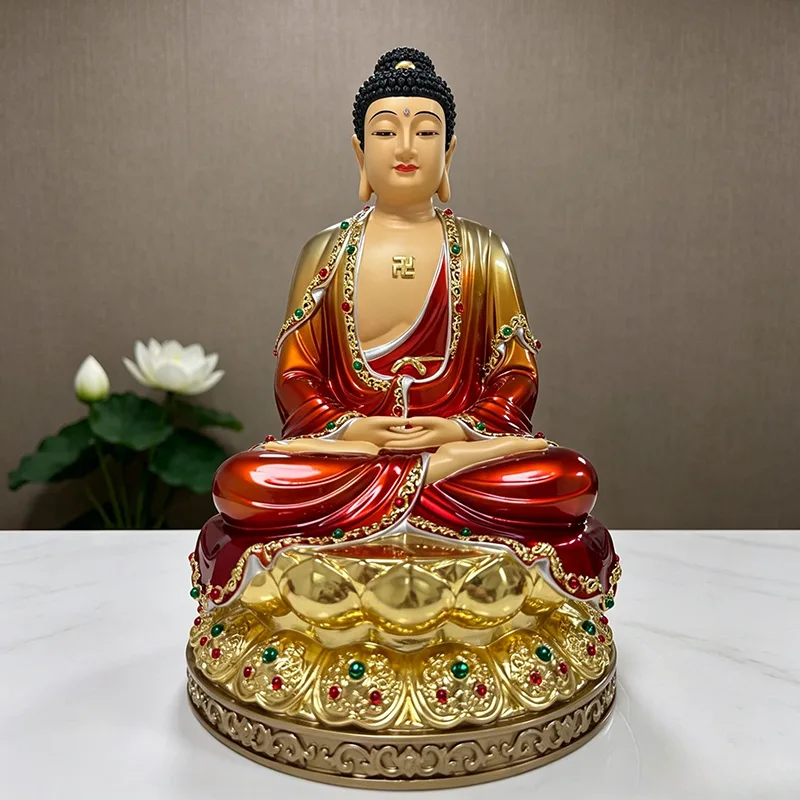
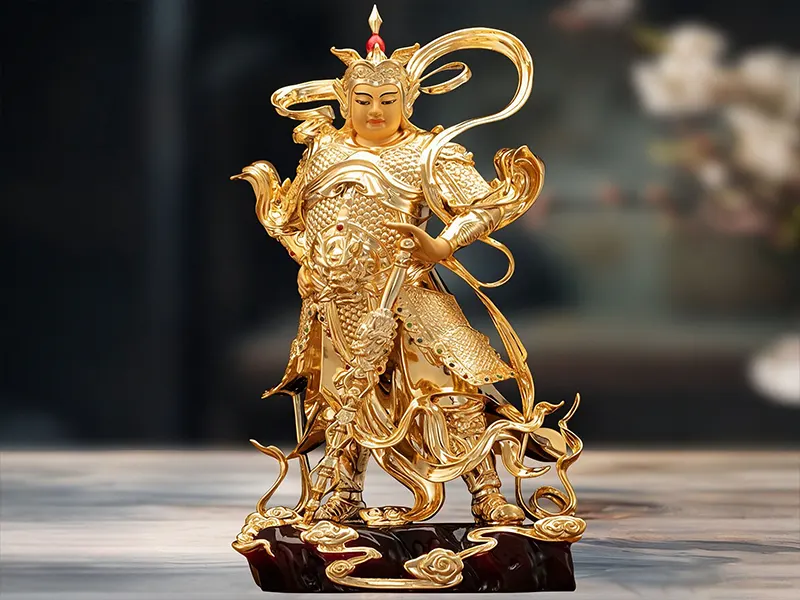
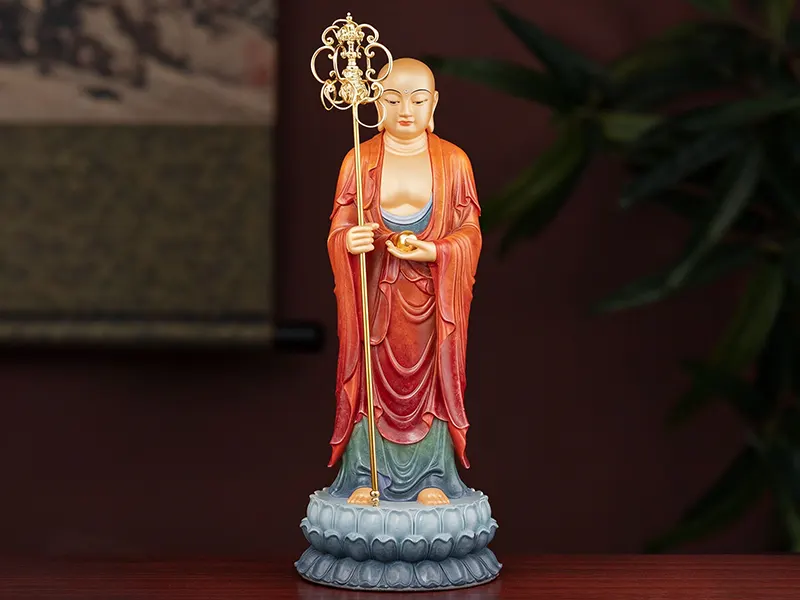
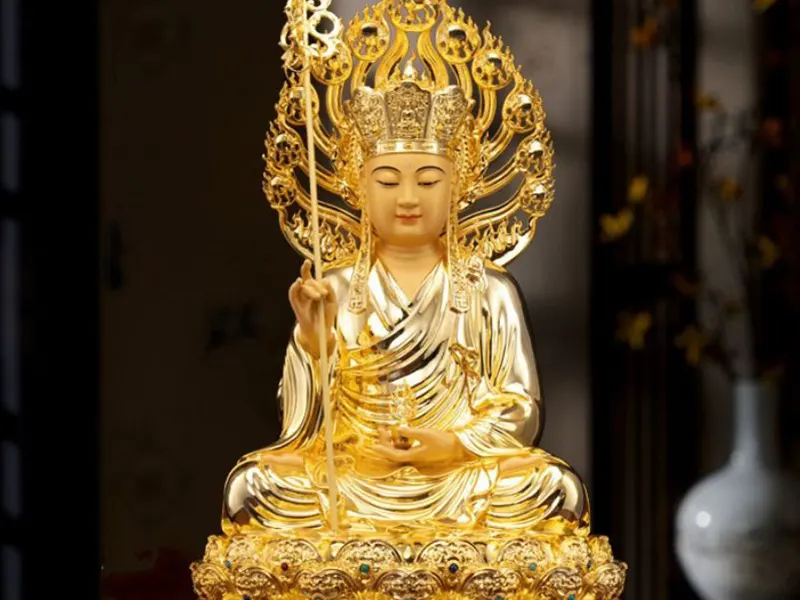
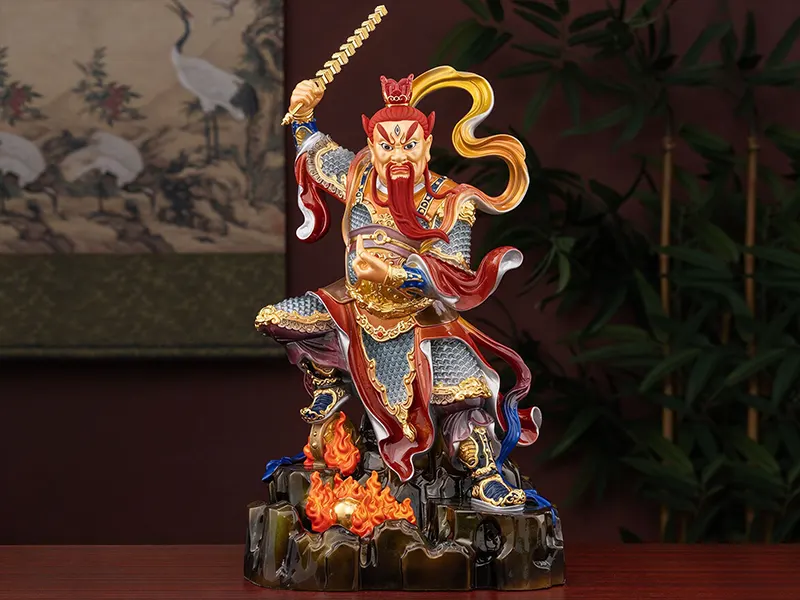
The creation of a brass Buddha statue is an art form that combines millennia of wisdom with master craftsmanship. Among the various casting methods, lost-wax casting (also known as investment casting) is widely recognized as the most suitable technique for producing brass deity statues with complex forms and intricate details. FuHui Veyly, a direct factory specializing in custom brass Buddha statues, has inherited and innovated upon this ancient method. This article provides a detailed walkthrough of the complete lost-wax casting process and key technical considerations for crafting temple bronze statues.
What Is Lost-Wax Casting?
Lost-wax casting dates back to the Spring and Autumn period (c. 770–476 BCE) and stands as one of ancient China's most significant bronze-casting techniques. The core principle is straightforward: a model is made from beeswax or paraffin wax, then coated with refractory materials to form a mould. When heated, the wax melts and flows out, leaving a hollow cavity. Molten metal is then poured into this cavity, and once cooled, the casting is complete. This method excels at producing highly complex shapes, faithfully replicating every fine detail of the original wax model in metal.
The Complete Lost-Wax Casting Process for Brass Deity Statues
Step 1: Clay Sculpting
The sculptor begins by shaping the initial form of the deity statue in clay, based on drawings, photographs, or sketches provided by the client. This is the most artistically demanding stage of the entire process – the sculptor must accurately capture the Buddha's compassionate expression, dignified posture, and spiritual essence. For Vajrayana (Tantric) statues, strict adherence to iconometric proportions is required, as specified in classical texts such as the Sutra of Proportions – covering facial ratios, mudra hand positions, and relative dimensions of various body parts. The clay model must be approved by the client before proceeding to the next stage.
Step 2: Silicone Mould & Wax Pattern Production
Once the clay model is approved, a silicone mould is made from it. Molten paraffin wax (melting point approx. 60–70°C) is injected into the silicone mould and, after cooling, the wax pattern is carefully removed. The level of detail in the wax pattern directly determines the final quality of the brass statue – every facial expression, robe fold, jewellery bead, and halo ornament must be precisely captured in wax. This stage demands extremely precise temperature control and meticulous handling.
Step 3: Shell Building (Investment)
The wax pattern is repeatedly dipped in a refractory slurry (a mixture of clay and fine quartz sand) and coated with stucco, layer by layer – typically 6 to 8 layers in total. Each layer must be air-dried and hardened before the next is applied, gradually forming a thick, hard ceramic shell around the wax. This process generally takes several days to a full week.
Step 4: Dewaxing & Kiln Firing
The invested wax pattern (now encased in its ceramic shell) is placed in a high-temperature kiln and heated to approximately 800–1000°C. The wax melts and flows out through openings (risers), leaving a hollow ceramic mould. Continued firing hardens the shell further while removing any residual wax and moisture, ensuring smooth metal flow during pouring. This step is critical in determining the final casting quality.
Step 5: High-Temperature Pouring
Molten brass (copper content ≥95%, temperature approx. 1100–1200°C) is poured into the hollow ceramic mould. The liquid metal flows under gravity to completely fill every void left by the wax pattern. The pouring process must be executed in one continuous motion to avoid premature cooling, which could result in incomplete filling or porosity.
Step 6: Shell Removal & Grinding
After the brass has cooled and solidified, the outer ceramic shell is broken away to reveal the rough casting. Internal refractory material is also removed. The surface of the bronze statue then undergoes coarse grinding followed by fine grinding to remove casting gates, burrs, and parting lines. This step must be carried out with care to avoid damaging delicate details.
Step 7: Welding & Assembly
Large statues are typically cast in multiple separate pieces (e.g., head, torso, arms, halo, lotus base) and then welded together. After welding, the joints are carefully finished and polished to ensure structural integrity and a seamless appearance.
Step 8: Surface Finishing
Depending on client requirements, various surface treatments can be applied:
1. Antique Patina: Chemical oxidation or manual aging techniques to achieve a time-honoured, classic appearance.
2. Gold-Leaf Gilding: Applying pure gold leaf over a lacquer base for a majestic, sacred finish.
3. Mercury-Gilding (Amalgam Gilding): A traditional technique where a gold-mercury amalgam is applied and fired, resulting in a durable, long-lasting gold layer.
4. Polychrome Painting: Mineral-based pigments applied according to ritual specifications for rich, vibrant coloration.
5. Heat-Coloring (Thermal Oxidisation): Controlled heating of the bronze surface to produce a variety of colour effects.
Core Advantages of Lost-Wax Casting
Lost-wax casting excels at reproducing exceptionally fine sculptural details – whether it's the Buddha's facial expression, mudra hand gestures, halo ornamentation, or ritual implements, all are accurately reproduced. This makes it the preferred process for custom brass deity statues, particularly for temples and Buddhist halls that demand high precision in iconography. Compared to sand casting, lost-wax casting offers superior surface finish, better dimensional accuracy, and the ability to cast more complex forms.
Key Technical Parameters for Lost-Wax Casting of Brass Buddha Statues
FuHui Veyly not only preserves the thousand-year-old lost-wax casting tradition but also integrates it with modern precision casting technology – retaining the essence of traditional craftsmanship while enhancing dimensional accuracy and surface quality. Our factory is located in Huizhou, Guangdong, and we warmly welcome clients from Taiwan, Malaysia, and around the world to visit and witness firsthand the complete transformation of a brass deity statue from wax pattern to finished masterpiece.
We use cookies to offer you a better browsing experience, analyze site traffic and personalize content. By using this site, you agree to our use of cookies.Privacy Policy