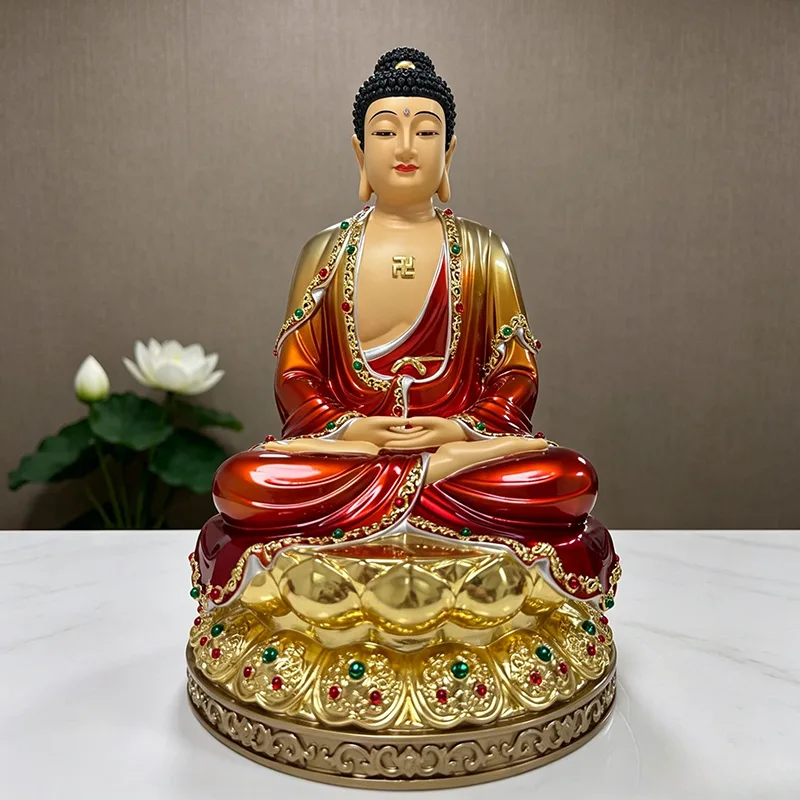
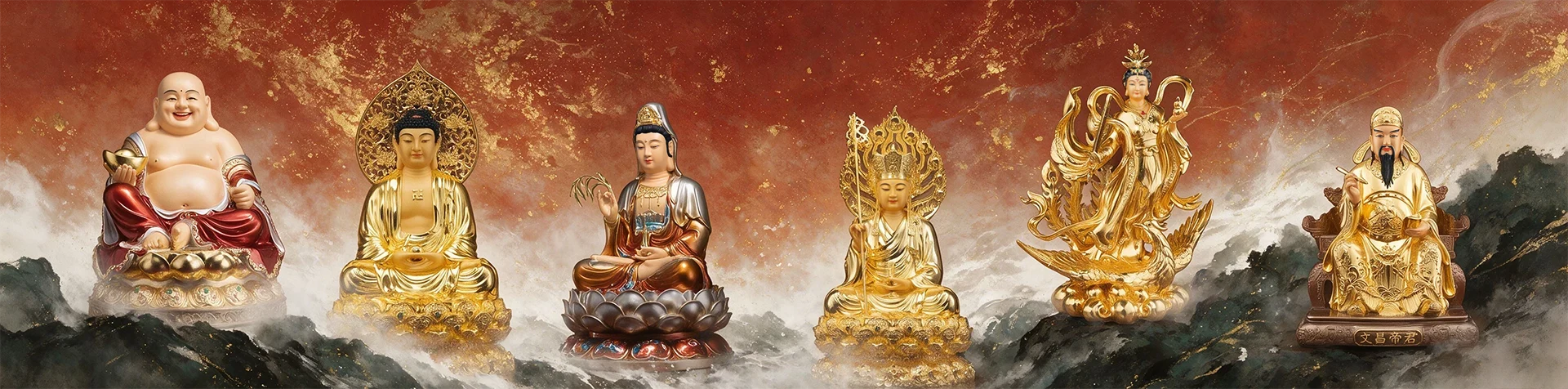
Fuhui Veyly is a professional China copper Ksitigarbha Bodhisattva statue foundry and supplier, based in Huizhou. Our statues are uniquely defined by attributes found on no other bodhisattva.
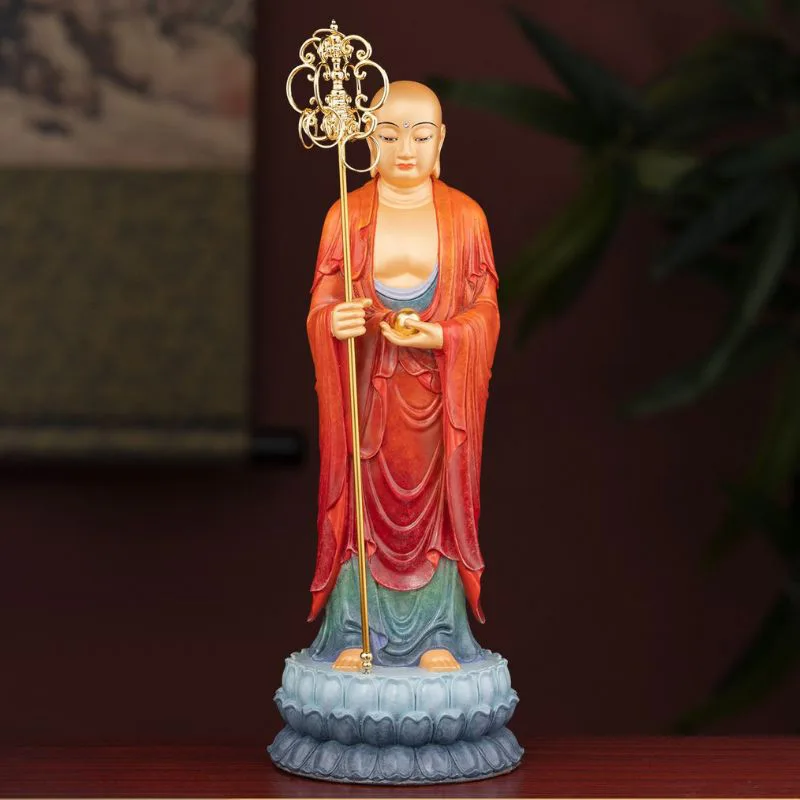
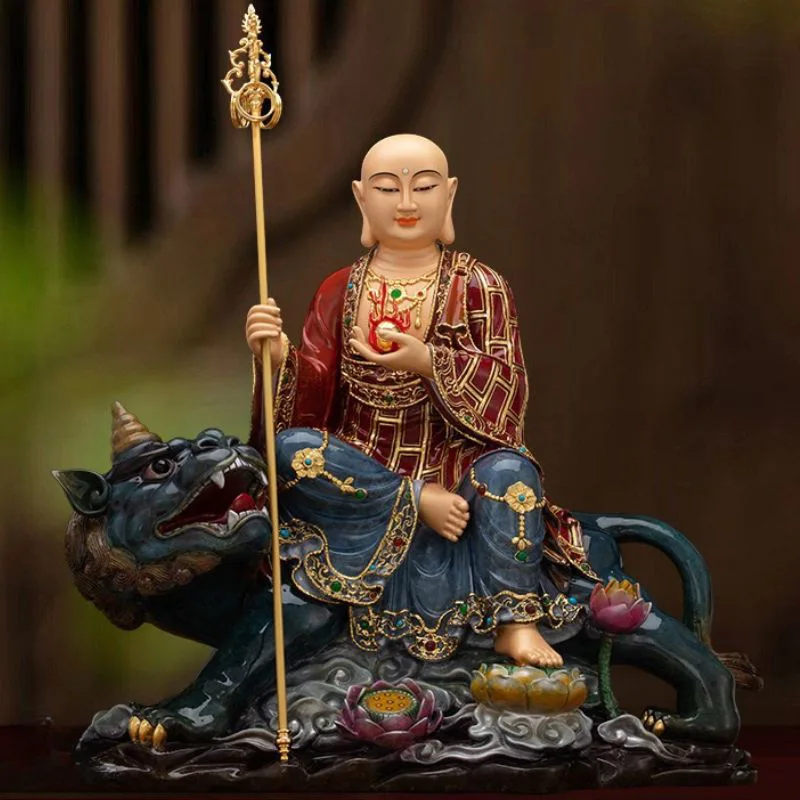
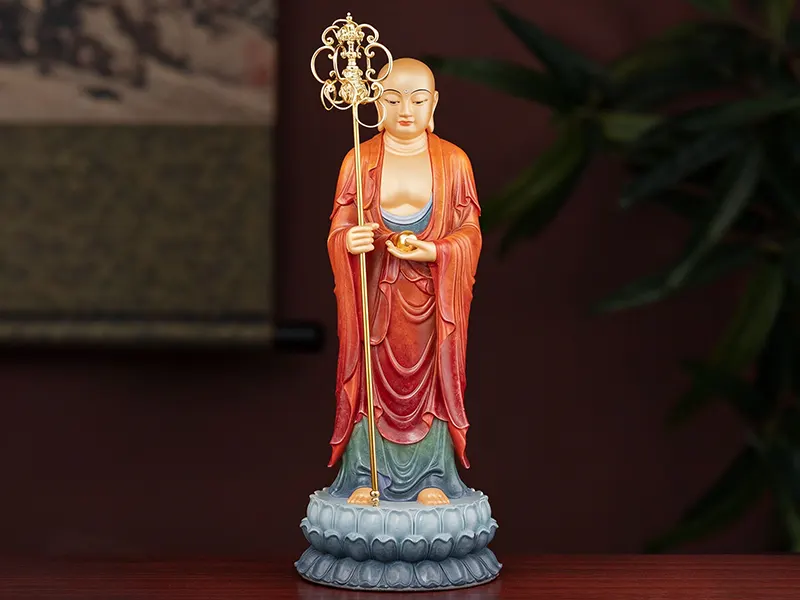
For our Ksitigarbha Bodhisattva statue, the six-ring khakkhara staff is held in the right hand, with each ring representing compassion extending to one of the six realms of existence, and the cintamani wish-fulfilling jewel is cradled in the left hand, radiating light that dispels suffering and illuminates the path to liberation.
Unlike the crowned Guanyin adorned with flowing robes, the princely Manjushri riding a lion, or the worldly Samantabhadra on a white elephant, Ksitigarbha appears as a humble monk with a shaved head and simple monastic attire — a deliberate visual statement of his vow to descend into the lowest realms of hell to rescue suffering beings.
Every statue we create follows this canonical iconography, with artisans dedicating 3-4 weeks to perfect the flowing robe details, the intricate rings of the staff, and the luminous surface of the jewel.
Using the lost-wax method with over 95% pure copper, our foundry hand-chases every detail before applying finishes such as 24k gold-gilding, antique patina, polychrome painting, or natural bronze, all protected by a 50-year anti-corrosion warranty.
Ksitigarbha holds a uniquely revered position across East Asian Buddhist traditions.
His vow, recorded in the Ksitigarbha Sutra, is the most extraordinary in Mahayana Buddhism: he swore not to attain Buddhahood until every hell is emptied and all suffering beings are liberated. This makes him the primary guardian of deceased souls, the protector of children, travellers, and pregnant women, and the most invoked bodhisattva in funeral rites and memorial ceremonies.
The six rings of his staff are traditionally said to represent his mercy reaching through all six realms, while the jewel illuminates the path from darkness to rebirth.
Because his iconography is so deeply tied to memorial and funerary practices, our copper Ksitigarbha Bodhisattva statues are predominantly commissioned for columbaria, funeral halls, and memorial shrines.
We have produced Ksitigarbha statues for major temples in Taiwan, columbaria in Singapore and Malaysia, Jizo shrines across Japan, and Tibetan Buddhist centres in Nepal and Bhutan, with a strong repeat order rate reflecting consistent satisfaction with our craftsmanship and cultural accuracy.
Our copper Ksitigarbha Bodhisattva statues are produced in three distinct regional traditions, each tailored to specific devotional contexts and cultural aesthetics.
It depicts Ksitigarbha standing or seated with a fully shaved head, wearing a simple monastic robe with no crown, holding the staff upright in the right hand and the jewel in the left, with a serene, determined expression.
This is the most common form for columbaria and funeral halls across Chinese communities worldwide.
It portrays a more youthful, rounded-faced figure with a gentle smile, often standing, sometimes wearing a red bib, apron, or hood — a tradition rooted in Jizo's role as protector of children and travellers.
This style is widely installed in roadside shrines, children's memorial sites, and temple gardens across Japan, and we maintain dedicated pattern archives for the distinct facial features and proportions unique to Jizo iconography.
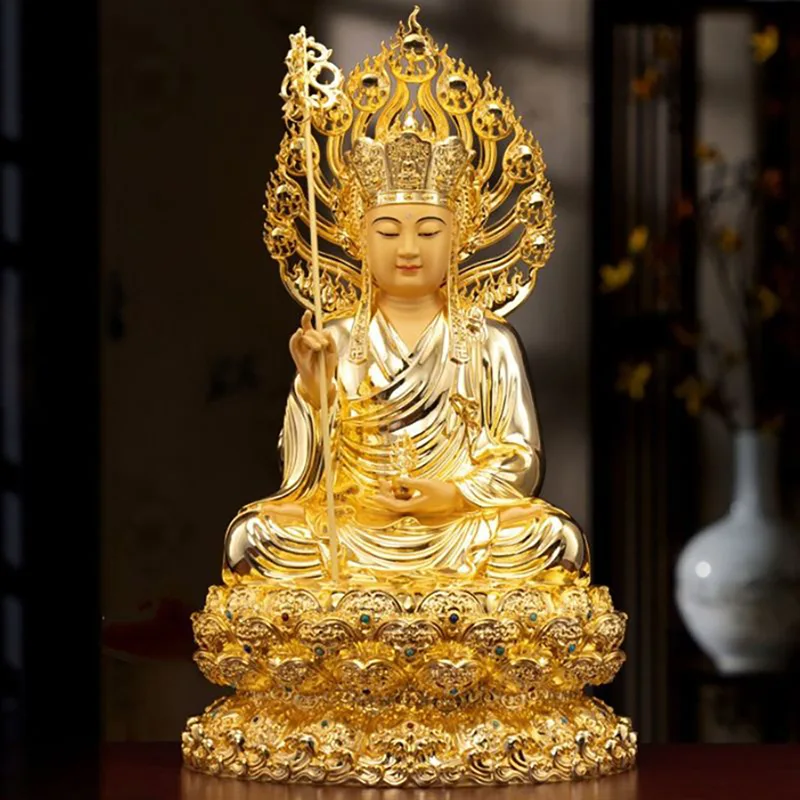
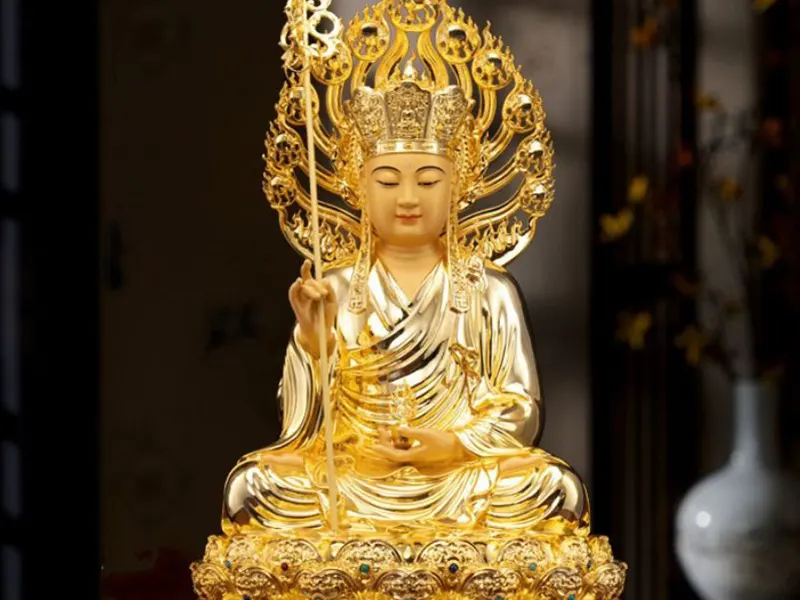
This type presents Ksitigarbha as a crowned bodhisattva with a five-point crown, seated in full lotus on a lotus throne, with the staff and jewel held in a more formal, ceremonial manner.
It is preferred in Himalayan monasteries and Tibetan Buddhist centers.
Gold-gilding dominates Chinese and Taiwanese temple commissions, antique patina is favored for Japanese Jizo garden shrines, polychrome painting is chosen for Vietnamese and Southeast Asian community halls, and natural bronze appeals to contemporary collections.
Each tradition requires dedicated pattern archives and specific finishing techniques, all of which our Huizhou artisans have mastered through years of specialised practice.
Each statue is signed and numbered by our master artisans in Huizhou, our factory maintains a monthly processing capacity exceeding 10 tons, enabling us to handle both small custom pieces and large-scale temple projects with equal precision
Contact our team for a free iconographic consultation to determine the most suitable tradition, size, and finish for your memorial or devotional space.
Any regional tradition, any size from 8 inches to 16 feet, any material, any finish, and even facial expression adjustments to match specific temple lineages or family preferences.
Every custom project includes detailed 3D renderings for pre-casting approval, video consultations and production updates throughout the casting and finishing process.
Secure global shipping with heavy-duty wooden crating and full insurance.
Standard production takes 45–60 days; gold-gilded, polychrome, or monumental projects over 10 feet require extended timelines.
We have completed a 14-foot copper Ksitigarbha for a columbarium in Taichung, Taiwan, requiring five-piece sectional casting and on-site assembly — demonstrating our capability for complex, large-scale commissions.
Contact our factory or visit our pages today for Ksitigarbha Bodhisattva Copper Statues, Jizo Copper Statues, and Dizang Wang Copper Statues.