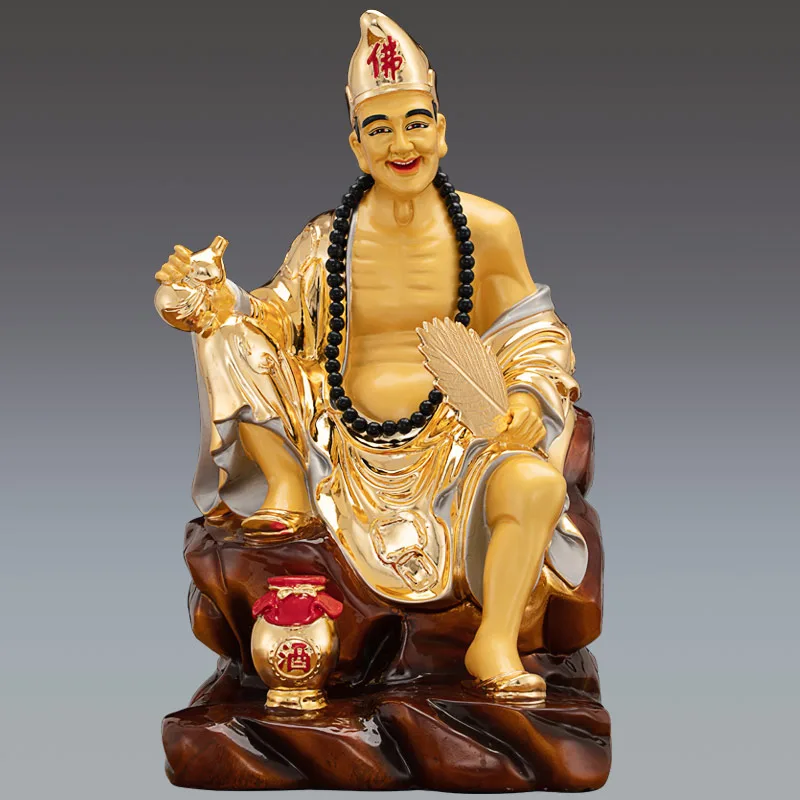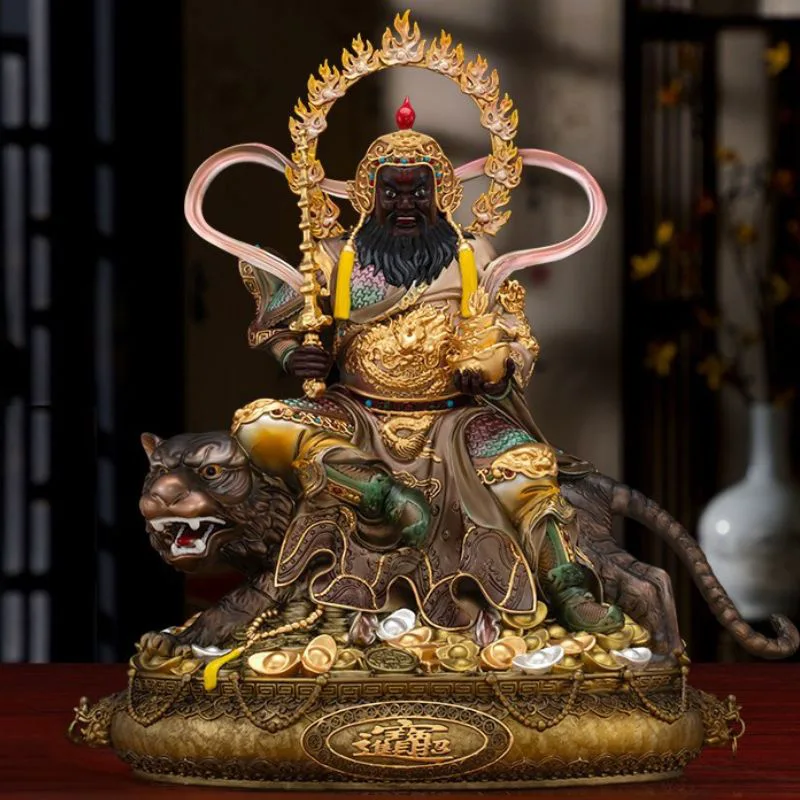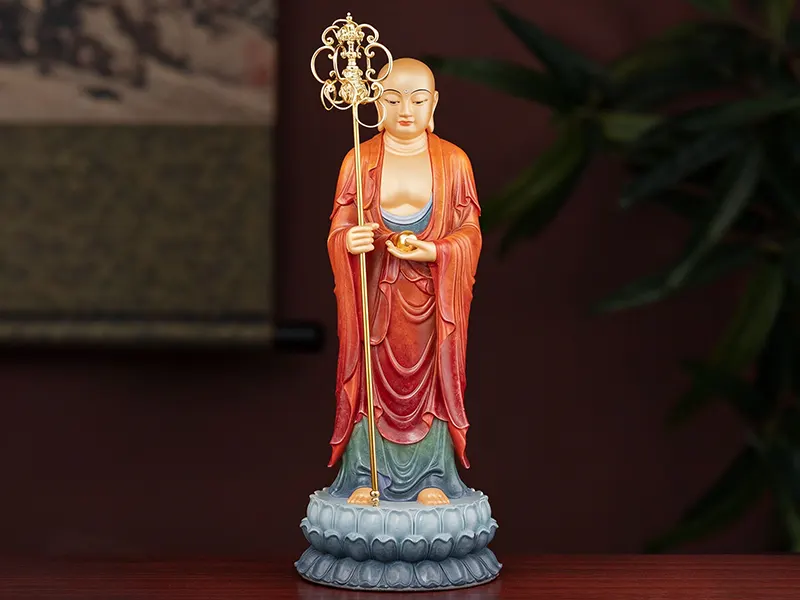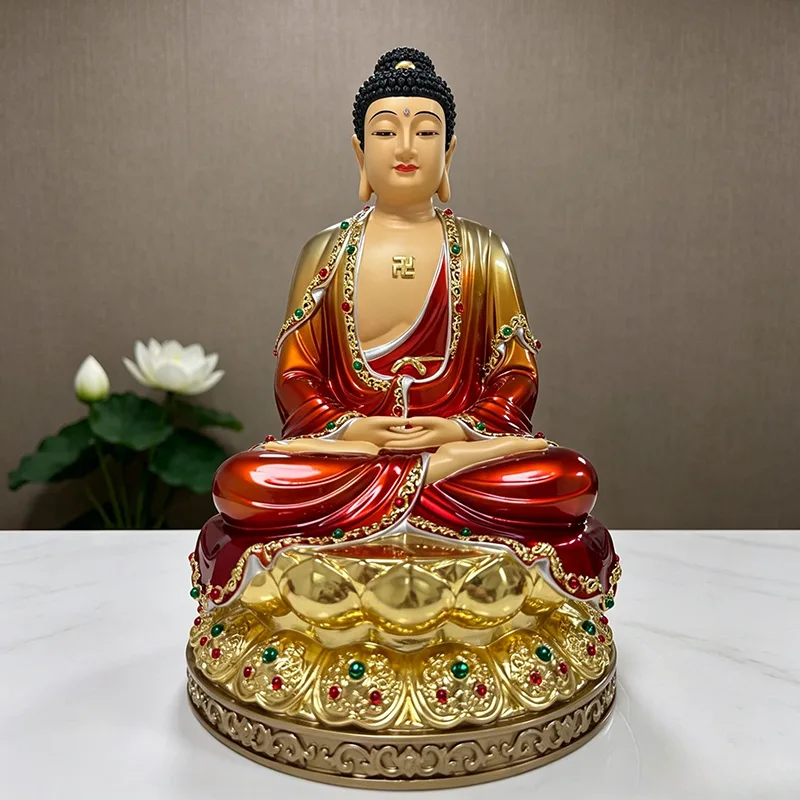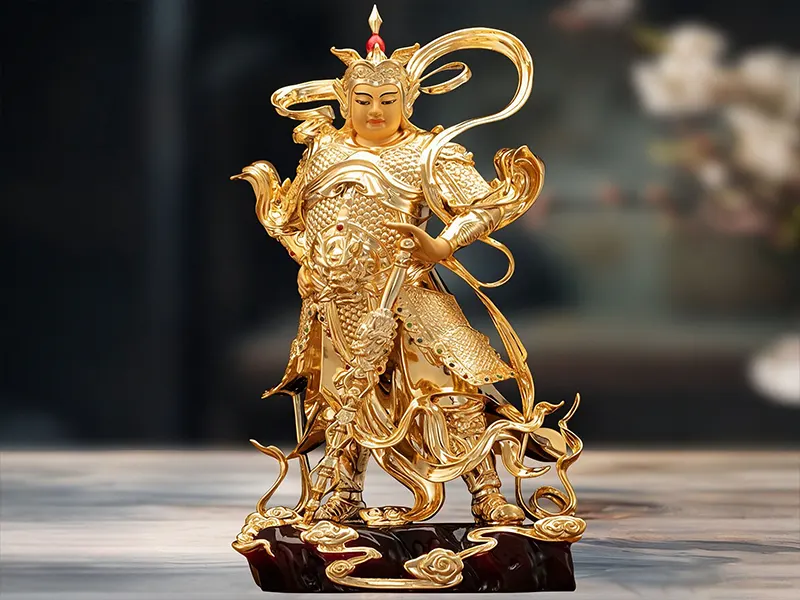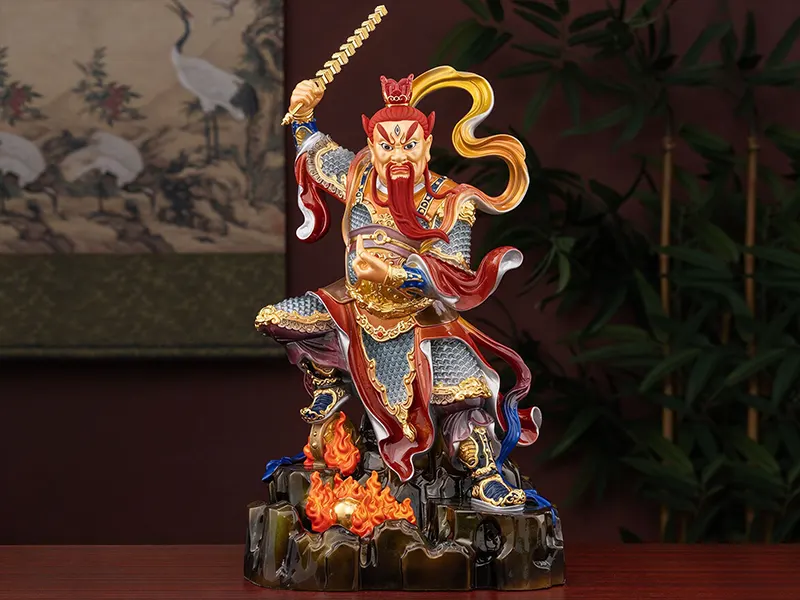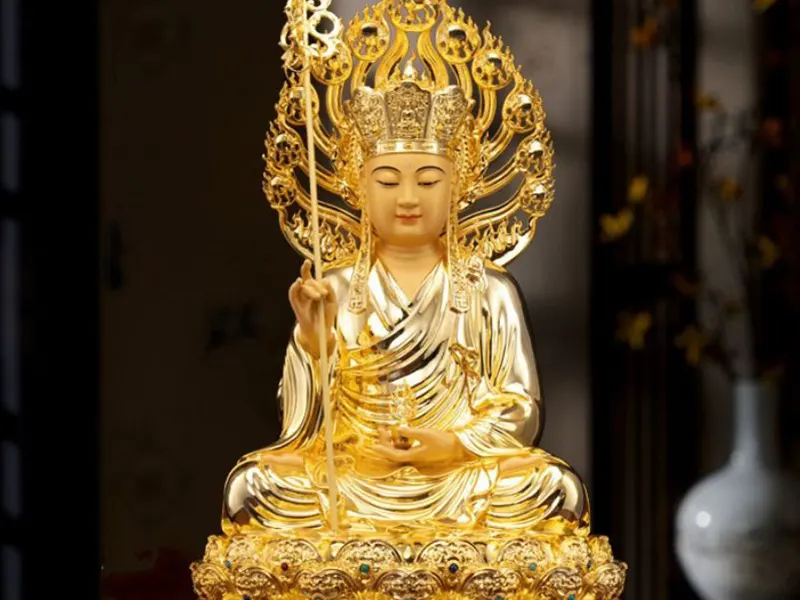
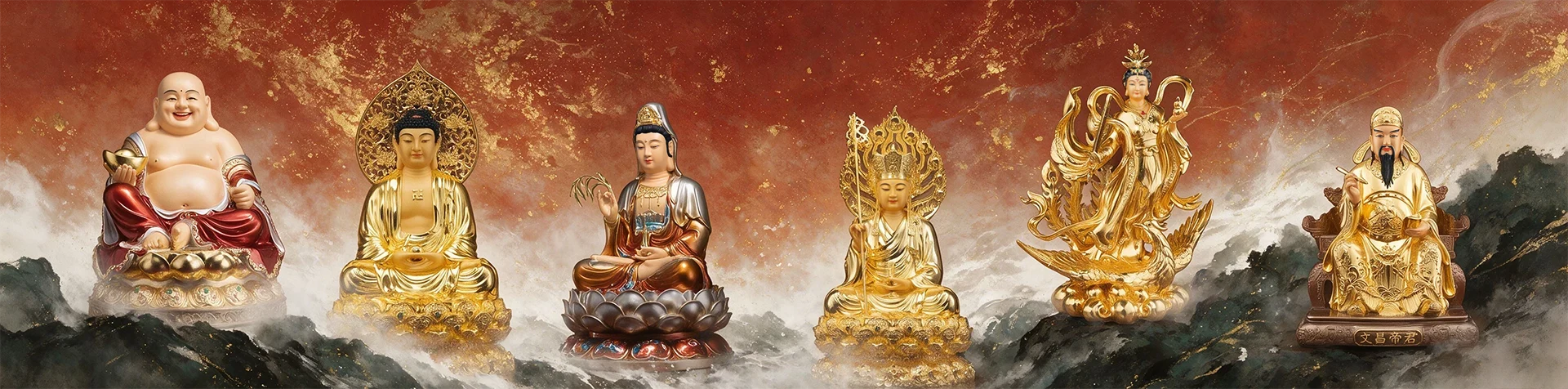
To get high quality and customized Tua Pek Kong Statues, you can contact Fuhui Veyly, as we are a professional manufacturer and supplier in China, offering various kinds of deity statues.
Tua Pek Kong, known in different dialect groups as Da Bo Gong or simply the Grand Uncle, is the Southeast Asian manifestation of the Chinese Earth God.
But he is not merely Tudigong with a new name. He is Tudigong transformed by migration, adaptation, and the unique conditions of Chinese settlement in the Nanyang region.
Unlike the Earth God in mainland China, who protects a specific plot of land, Tua Pek Kong is a regional patriarch who guards entire communities, oversees territorial boundaries, and serves as a mediator between the human and spirit worlds.
The transition from Tudigong to Tua Pek Kong reflects cultural adaptation.
When Chinese migrants arrived in Southeast Asia during the 19th century, they brought their Earth God with them. But conditions were different, they were merchants, laborers, and pioneers navigating unfamiliar terrain and dangerous seas.
The Earth God who watched over a village in Fujian became something larger in the Nanyang: a territorial protector overseeing entire mining districts, plantation communities, and urban neighborhoods.
In parts of Malaysia and Indonesia, he is sometimes associated with local spirits, a syncretism that does not exist in mainland Chinese traditions.
This blending of Chinese and local beliefs is a hallmark of Nanyang folk religion.
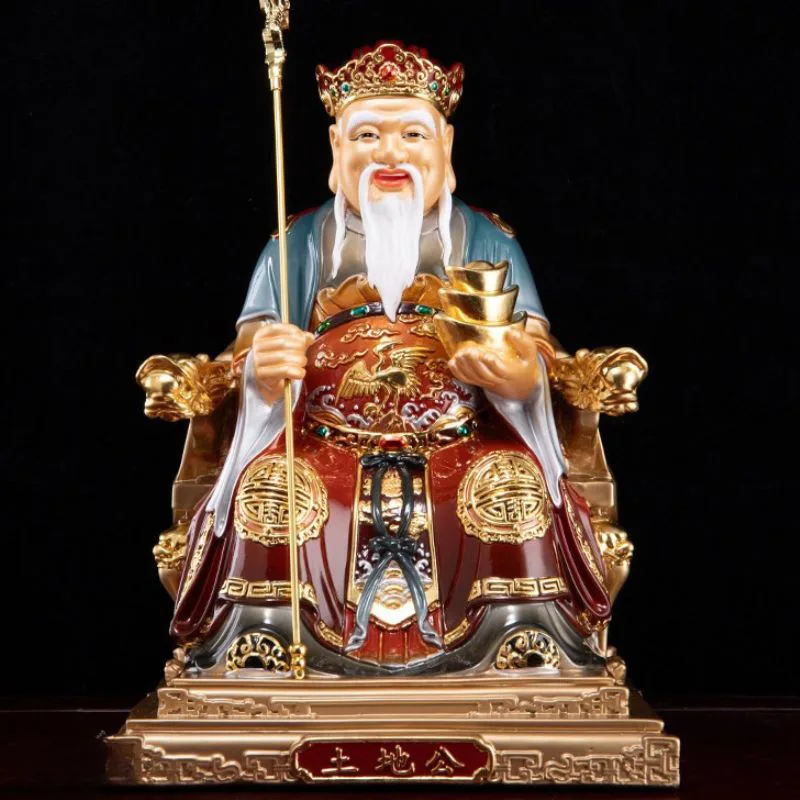
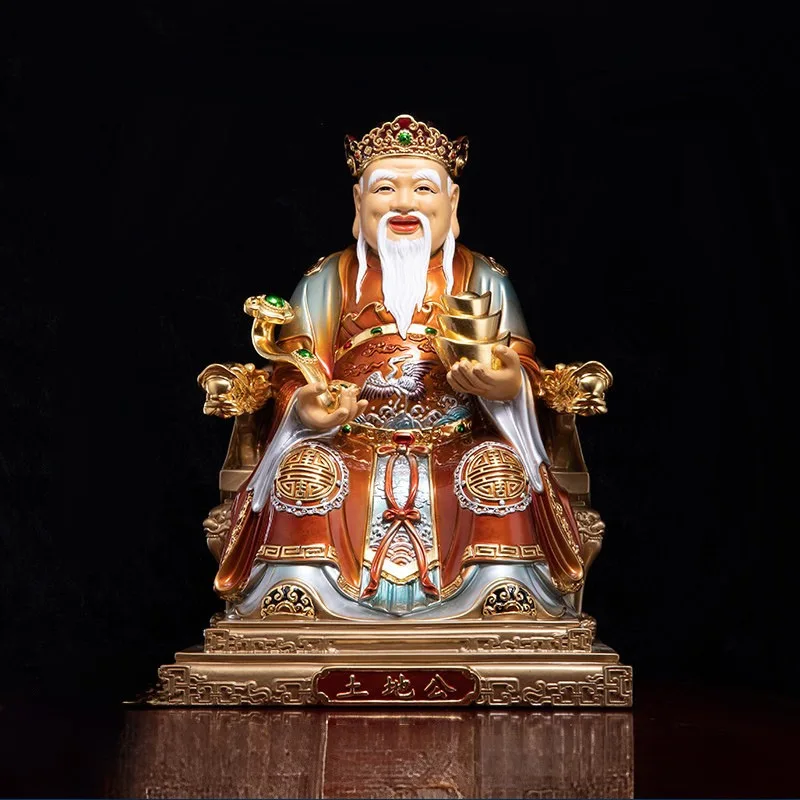
Tua Pek Kong is almost always depicted as an elderly man with a long white beard, a kind face, and a warm, approachable expression. He wears the robes of a Chinese official, carrying either a golden ingot (symbolizing prosperity) or a wooden staff (symbolizing authority over the land).
In some traditions, he is accompanied by Tua Pek Po, his consort. The most significant regional distinction is that Tua Pek Kong is sometimes portrayed with localized features, reflecting the blending of beliefs in the Nanyang.
A well-crafted copper statue invites people to stop, bow, and ask for help. This is why temples, businesses, and families choose copper: it captures fine facial detail that mass-produced materials cannot replicate.
The application scenarios of Tua Pek Kong statues are broader than any other Nanyang folk deity.
Shop owners: Put statues on their counters.
Factory managers: The statues can be used to protect workers.
Homeowners: Get statues for family altars.
Clan associations: Get statues for their halls.
Fuhui Veyly casts Tua Pek Kong statues in the full range of regional traditions:
1. The Hokkien form with classic official robes
2. The Hakka Da Bo Gong form with regional facial variations
3. The Pan-Nanyang form found in larger temple installations.
Sizes range from 8-inch desktop pieces to 12-foot temple installations.
Finishes reflect regional preferences:
Gold-gilding dominates Singaporean and Penang temple commissions, polychrome painting is favored in Indonesian and Thai Chinese temples, and antique patina is chosen for heritage restorations.
We offer complete customisation and welcome procurement visits to our Huizhou facility.