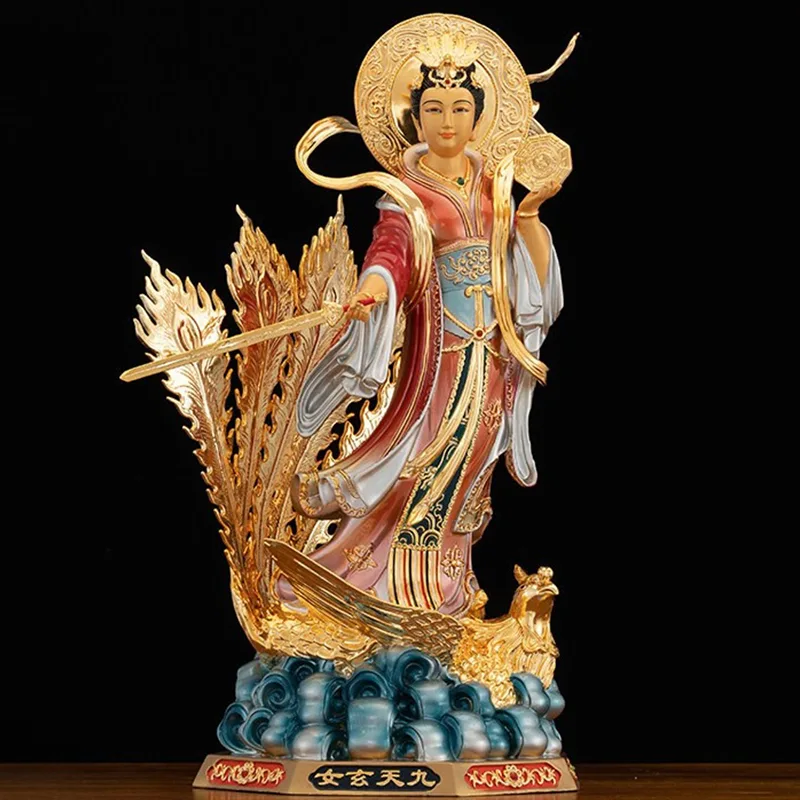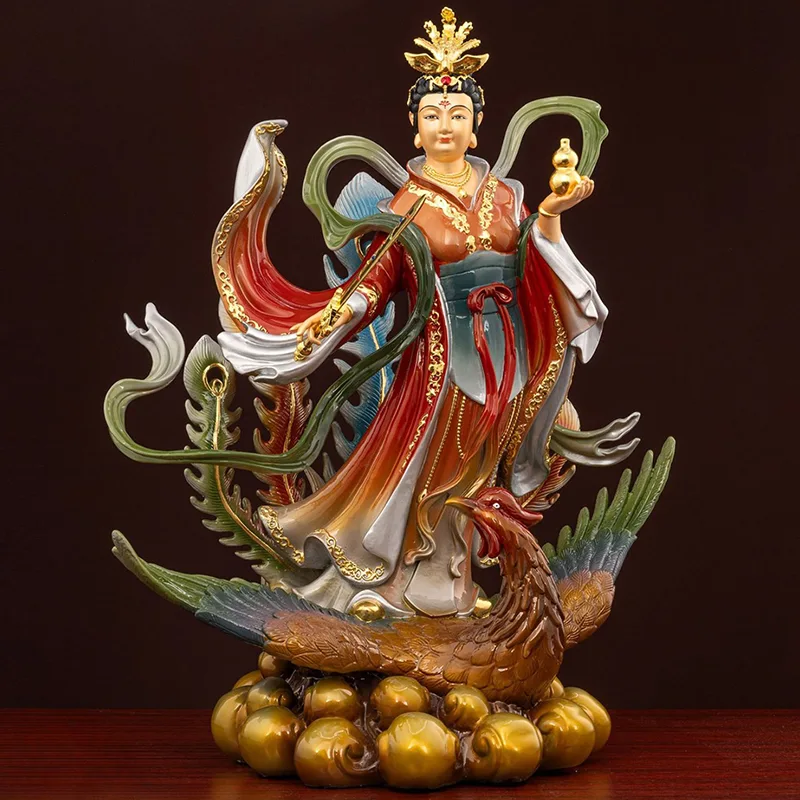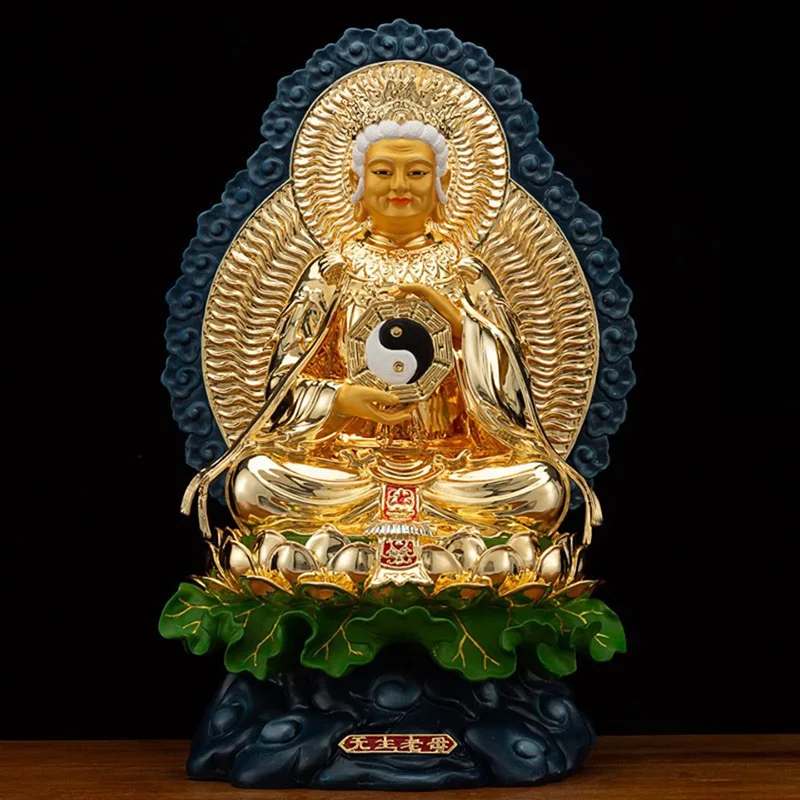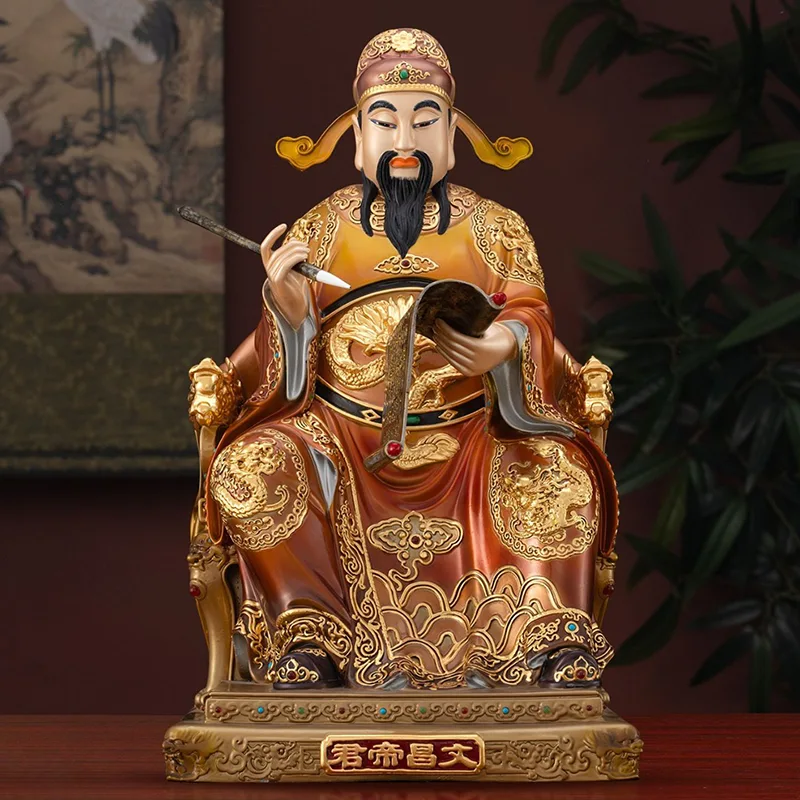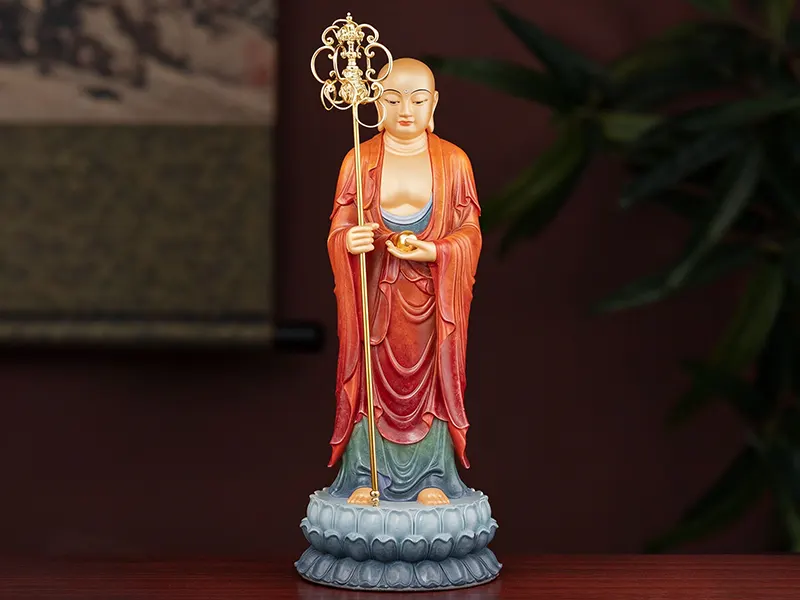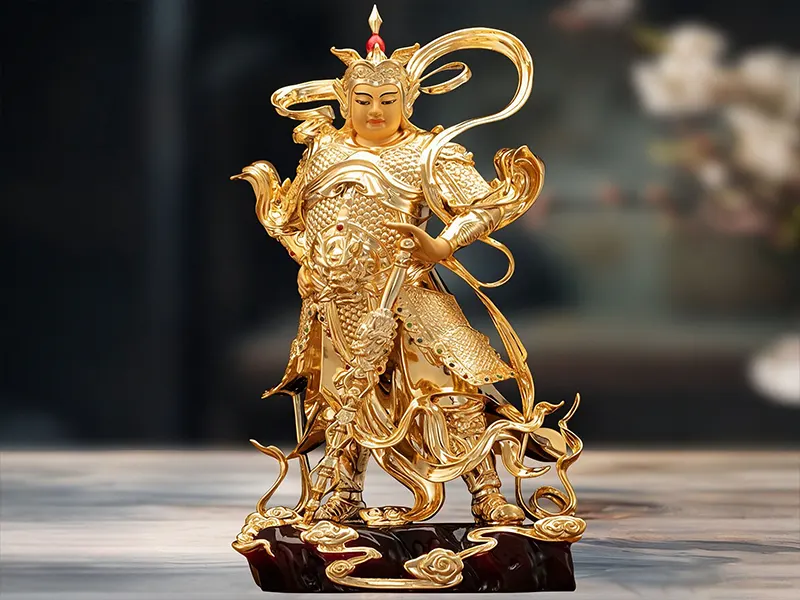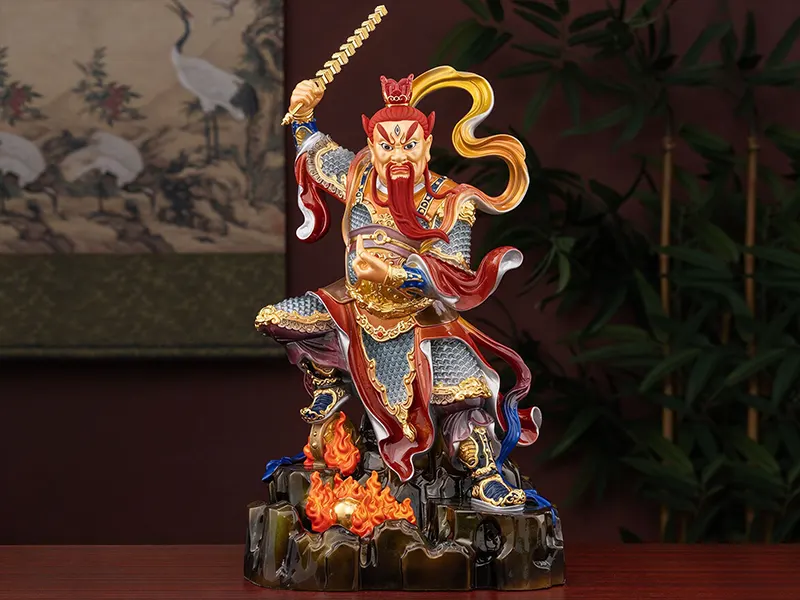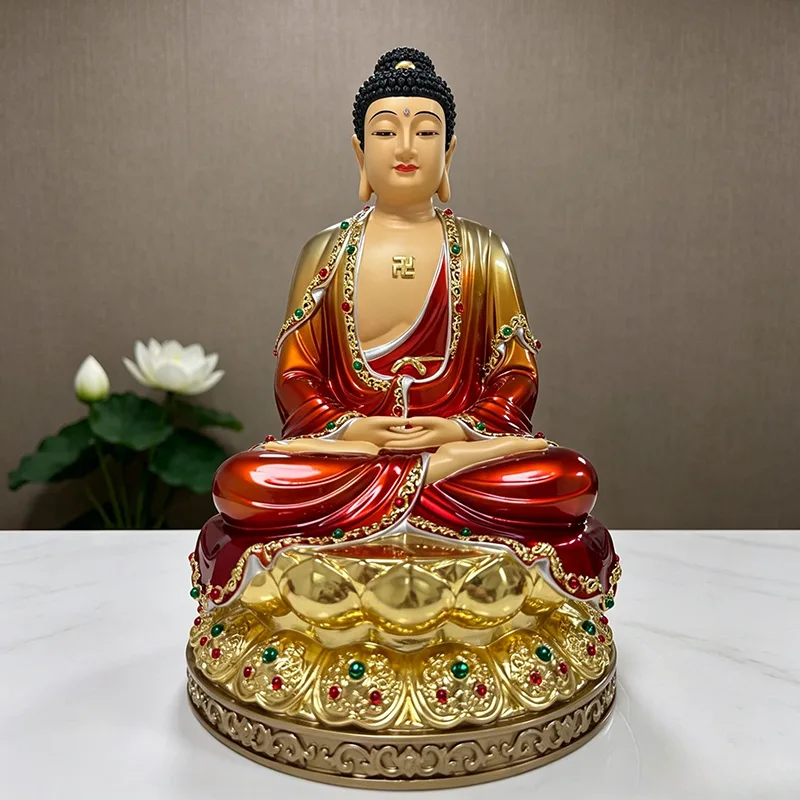
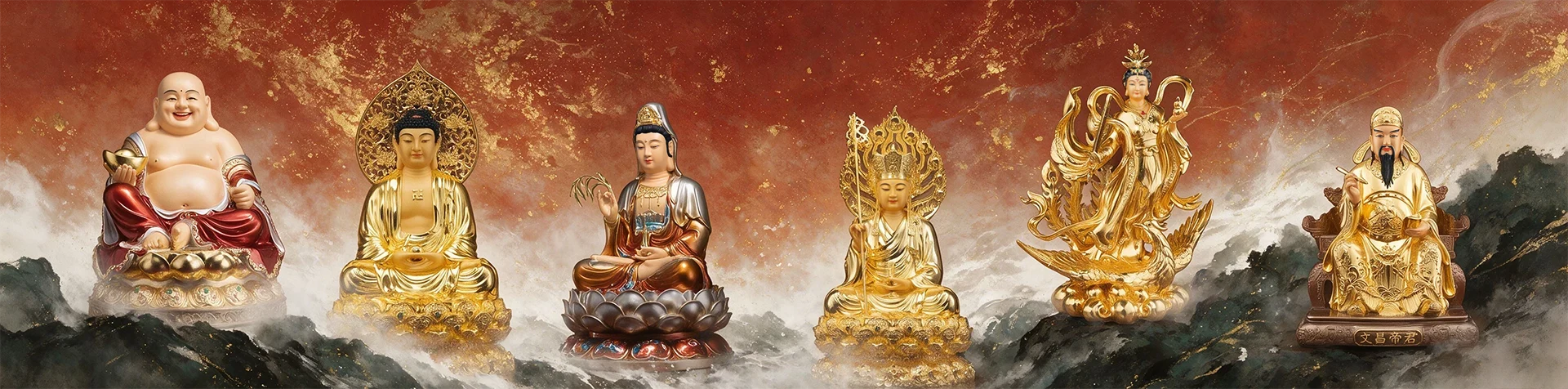
Jiutian Xuannü Statue is one of the various Taoist deity statues that Fuhui Veyly can provide. We have our own factory and offer customized solutions and direct sales prices. You can tell us your needs and get advice.
Jiutian Xuannü, the goddess who taught the Yellow Emperor military strategy over 4,000 years ago, has evolved significantly across different Chinese communities.
In Taiwan, she is known as Incense Mother, the patron of incense manufacturers and the deity of matchmaking, exam blessings, and fertility.
In Singapore and Malaysia, she connects clans to their ancestral roots through temples like Jiuxian Gong in Tampines.
In mainland China, she remains a goddess of strategy and divination.
This diversity means temples and institutions commissioning Jiutian Xuannü statues must consider which tradition they follow, and the statue's iconography must reflect that choice.
For temples following the mainland tradition, Jiutian Xuannü appears with celestial robes and bird motifs, referencing her original form.
The figure has gentler features and may hold incense or a medicinal container.
Regional facial and posture adjustments reflect local artistic influences.
Our Huizhou foundry maintains dedicated pattern archives for each tradition, ensuring every copper Jiutian Xuannü statue follows the correct iconographic canon for its intended community.
Using the lost-wax method with over 95% pure copper, our artisans hand-chase every detail, the celestial robes, the phoenix crown, the ruyi or incense vessel, before applying 24k gold-gilding, antique patina, or polychrome painting, all protected by a 50-year anti-corrosion warranty.
The mainland and Taoist temple tradition depicts her in formal celestial attire with bird motifs and carrying a ruyi, or sword, representing her original role as the goddess of strategy and divination.
It is preferred by Taoist temples and cultural institutions following orthodox Daoist canon.
This tradition features gentler facial features, a phoenix crown, and often incorporates incense vessel or medicinal container imagery, reflecting her adopted role as the patron of incense makers and the goddess of matchmaking and exam blessings.
It is widely requested by community temples and commercial incense manufacturers across Taiwan.
The Southeast Asian clan tradition shows regional influences in facial structure and posture, often combined with elements from both mainland and Taiwanese traditions.
This style is favored by clan temples and cultural organizations in Singapore, Malaysia, and Indonesia, where Jiutian Xuannü connects communities to their ancestral heritage.
1. Gold-gilding: dominates Taoist temple commissions
2. Polychrome painting: favored by Incense Mother temples
3. Antique patina: chosen by heritage restorations and clan temples
4. Natural bronze: appeals to collectors and cultural institutions
Each tradition requires dedicated pattern archives, all mastered by our artisans.
Taoist temple main halls: The Jiutian Xuannü Statue is enshrined as a war goddess and divination deity.
Incense manufacturer shrines and guild halls: She is worshipped as Incense Mother.
Clan association halls and community temples: Connects diasporic communities to their ancestral heritage.
Schools and educational institutions: Students seek her blessing for exams.
Matchmaking temples and marriage bureaus: singles pray for relationships.
Private home altars: Used for personal devotion.
We have delivered Jiutian Xuannu statues to temples and institutions across Taiwan, Malaysia, Singapore, China, Indonesia, and other countries, with a strong repeat order rate among temple and institution clients.
We offer complete customization:
Regional tradition: mainland Taoist, Taiwanese Incense Mother, or Southeast Asian clan
Size: 8 inches to 14 feet
Material: silicon bronze, tin bronze, or brass
Finish: gold-gilding, polychrome, antique patina, or natural bronze
Every custom project includes detailed 3D renderings for pre-casting approval, video consultations and production updates, and secure global shipping with heavy-duty wooden crating.
Standard production takes 45-60 days; gold-gilded or polychrome projects require 60-90 days.
Contact our Huizhou team for a free iconographic consultation to determine the most suitable tradition, size, and finish for your temple or devotional space.